

You win some, you lose some
On gains and losses in the months before publication

In the run up to publication, I’ve started to lose things. My mind, of course, but possibly also the ability to do the very thing, one hopes, I’ll eventually be recognised for: writing. I had to bribe myself to write this before the end of April. And then there was the Big Loss before the year was up – the blow to the skull that’s left me dazed and stupid ever since, inspiring in its aftermath, many little losses.
Lost framed as something I did is perhaps an unkindness in this example. I didn’t lose them, not like I’ve lost countless umbrellas, forgotten in car foot wells or restaurants. No, I didn’t lose them, they left, leaving me to haunt the remnants of my first home – the one we chose and began to build together. The bookshelf in the living room is a continued symbol of this loss – a project begun and abandoned. Tools I don’t know how to use peek from cubby holes in a mockery of failed domesticity. Every day, the mismatch of plywood and black shelves, their irregularity mistaken by others for a quirky interior design choice. Reader, I am learning to live with this loss, but it’s so much harder than it needed to be.
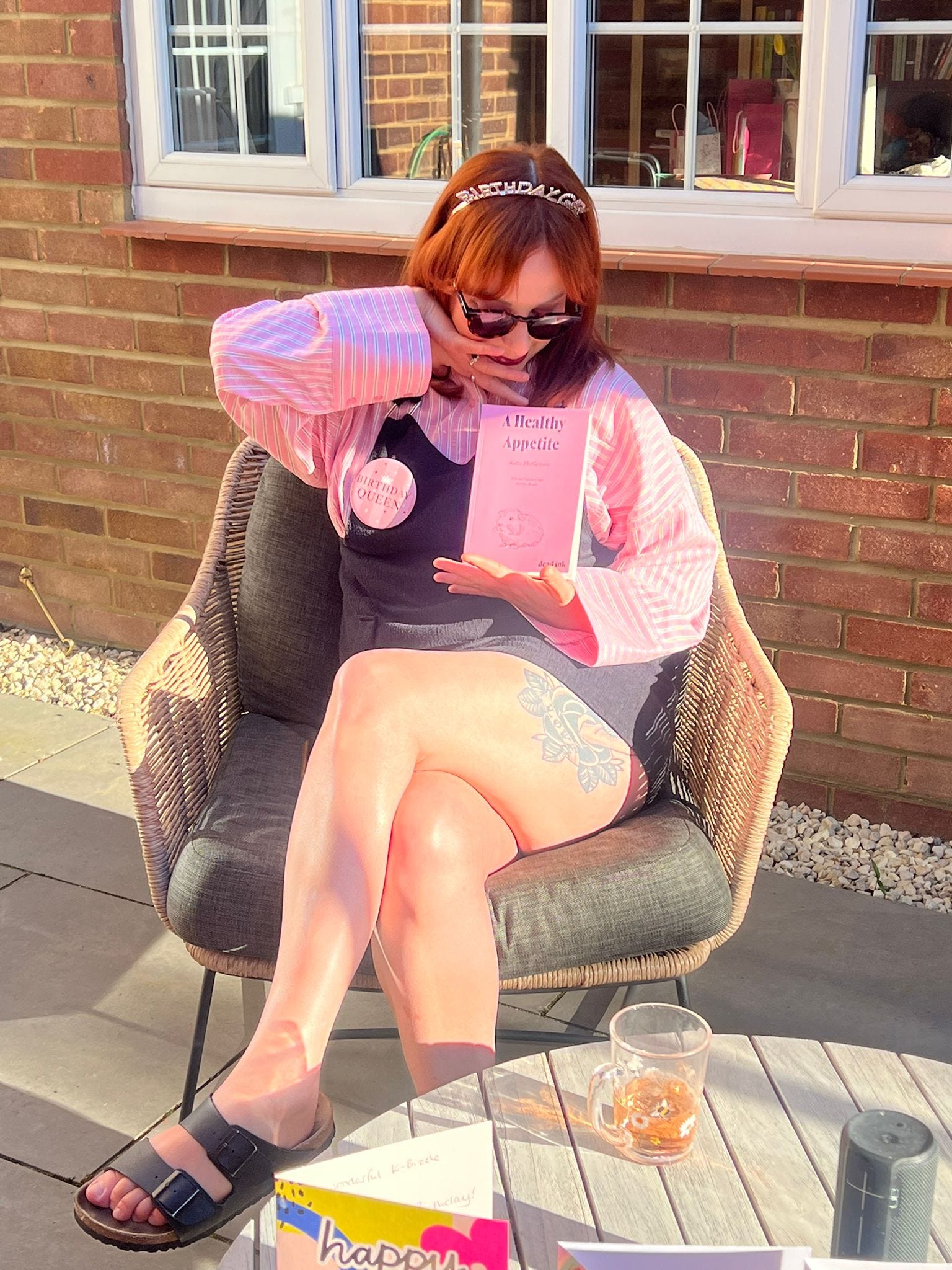
Last weekend I turned thirty-six. A tipping over into the second half of adulthood with more losses than gains, if we’re tallying them up. When relationships end we risk losing faith in ourselves too. Self-esteem shaken, we abandon confidence in the knowledge that we are someone worth loving. Now I’m older and use more serums than seems sensible, I’m all-too aware that I’ve lost beauty, elasticity, the ability to stave off the effects of gravity. People have stopped seeing me as they once did – men’s eyes stare through me instead of into me. How funny that being a woman means this switch-up is both a relief and a cause for mourning, all at once.
‘To be seen—to be seen—is to be…penetrated,’1 Aunt Lydia evangelises in Atwood’s The Handmaid’s Tale. She means it as a warning, is preaching modesty whilst justifying the stifling handmaids’ uniforms. I don’t want to be penetrated either, but I do want to be perceived – to be really seen. My therapist tells me that being published will lead to a bigger kind of life, the world opening up after a long period of isolation. She’s not wrong. I recognise that despite my losses, there are already beautiful gains.
Because I was brave and started to attend an in-person exercise class, there are muscles in my legs and stomach that have slumbered for some time, newly raised by the Reformer Pilates I started up at Christmas. The other day I held my entire body weight on my forearms and raised a leg into the air in an acrobatic feat my poor chronically ill body said wasn’t possible and yet here we are. I own special socks for this purpose, fancy leggings too; my oxygen capacity is at 100% and the nurse said that’s probably better than her, like my claim to cancer is some complicated ruse for free scans and expensive medication.
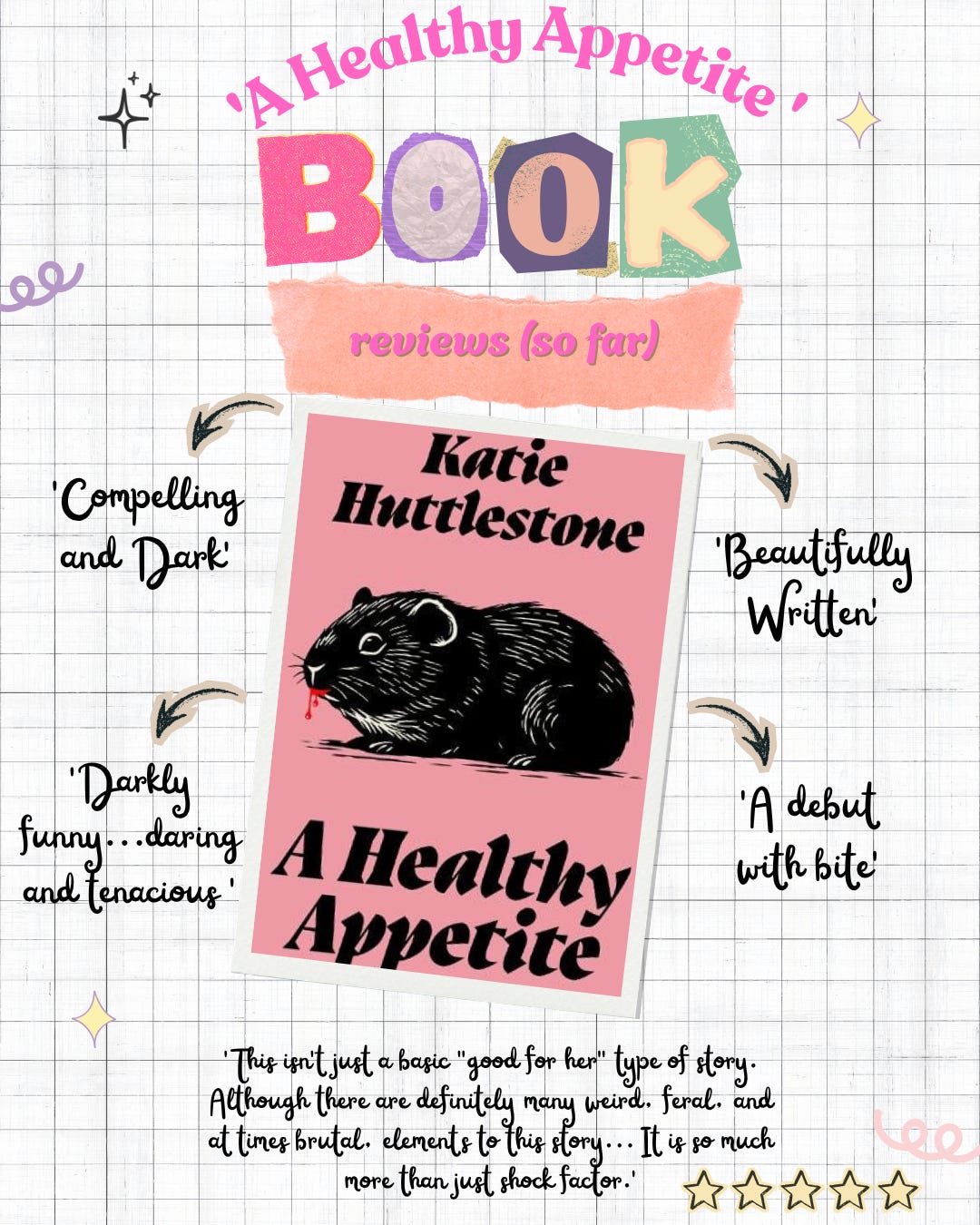
Early readers of A Healthy Appetite have started to post their reviews, and through them, I’ve gained readers. Most profound of all, people have cared enough about my words to write paragraphs of insights and compliments and post them in places others will see them. It’s still early days. At the moment, I’m looking at reviews – call it morbid curiosity or masochism if you will – but I have taken more than I’ve lost reading them. Perhaps that will change when the book reaches wider audiences, but for now I’m tallying up those five stars like scores on a dart board and claiming an early victory.
I guess that’s life, not just being an author: a series of peaks a troughs, wins and losses, eventually evening itself out. For now I’ll try to focus on what I’m gaining in 2026: an audience, new friendships, and a bigger sense of the world that being chronically ill will sometimes feel like a pleasure and a curse all wrapped up together. But keep it all coming. Let me live this life of checks and balances for as long as this body will have me.
For prosperity, here’s one of the incredible early reviews I’ve gained since my arcs went out into the world. Maybe it will inspire you to press that magical pre-order button and I’ll gain another one of you too.

Atwood, Margaret. The Handmaid’s Tale. Random House, 1986
In other news…
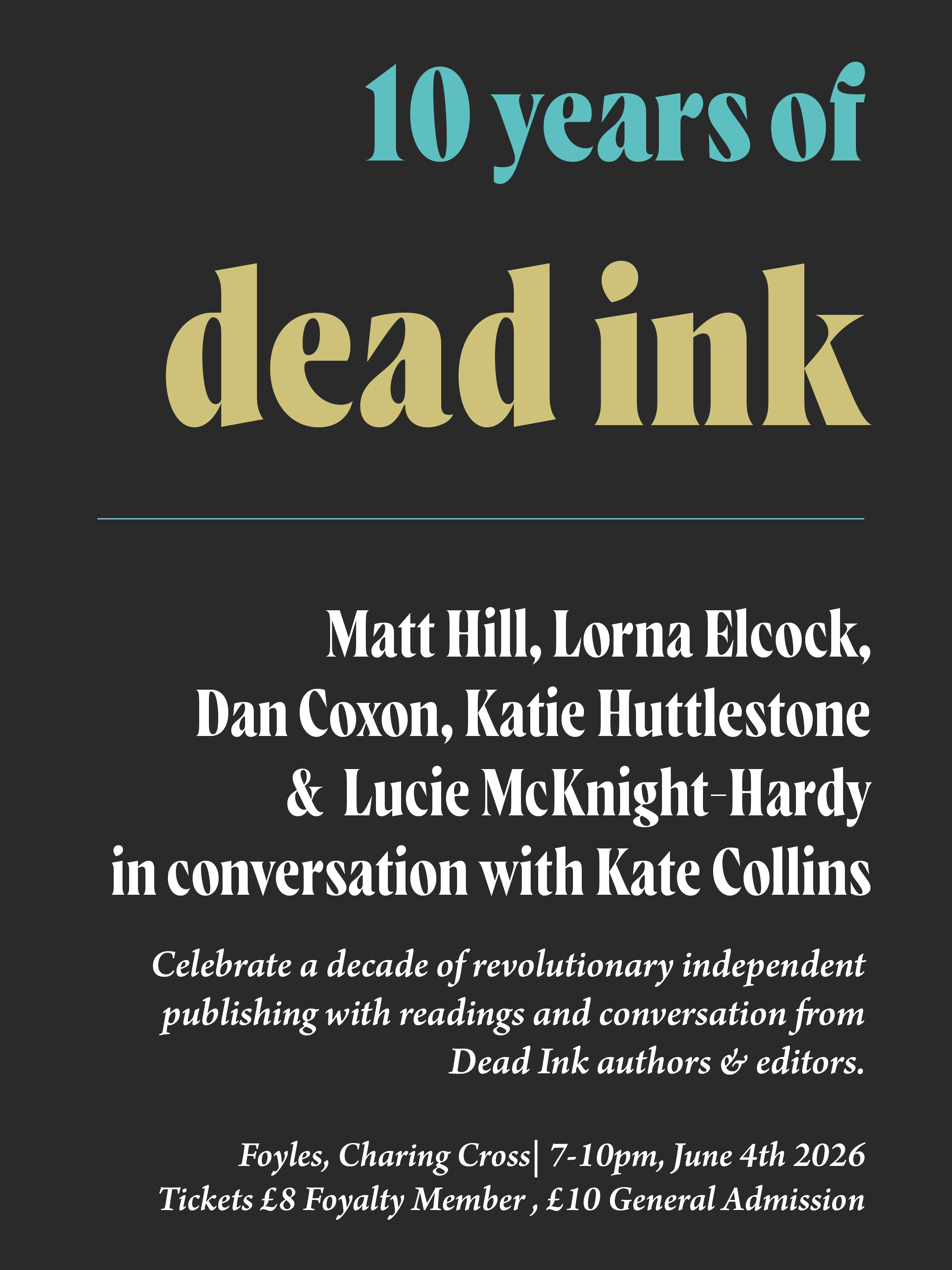
You can support me at my first ever event celebrating Dead Ink’s 10 year anniversary. Tickets are available here.
Screen Saver 🎬
What I’m Watching
BEEF - Season 2, now streaming on Netflix
Put Oscar Isaac and Carey Mulligan in it and I’m going to watch it.
At the point of writing this, I haven’t quite finished, but can safely say it fits nicely into the vacuum left by season one. At it’s heart? A sizzling serving of beef. Characters gnawing at each other’s throats. Lovers becoming enemies, enemies becoming lovers and everything in between.
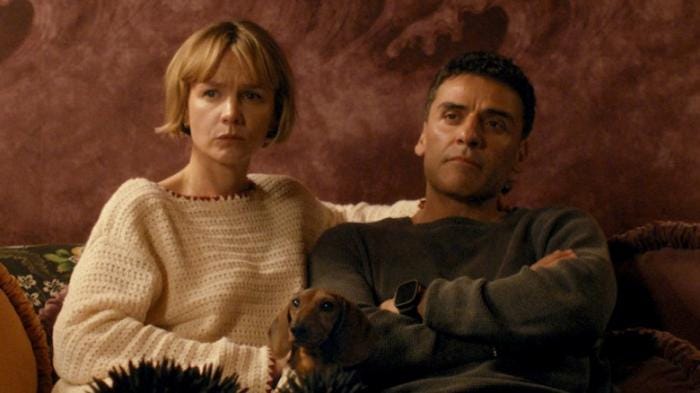
The premise? A Millennial couple, glitzy and gorgeous outwardly, but falling apart behind closed doors are set against a pair of Gen-Z hopefuls: financially struggling but sickeningly in love. When Austin and Ashley fumble into witnessing a violent altercation between Isaac and Mulligan’s characters they leave with evidence and promptly hatch a mercenary plan to secure promotion at the country club they’re both hired at - incidentally run by the very couple they have dirt on.
Without giving anything away, let’s just say it spirals way beyond this initial conflict, with rivalries splitting off and doubling into every which direction. There are so many delicious betrayals and power struggles I found myself flip-flopping between who I was rooting for. This is part of the fun.
This season has a touch of The White Lotus about it, but its serves up its own despicable story without compromising on originality. Some say it’s a step down in quality since season one, but I think we can let it stand in its own right, as a super watchable contribution to the anthology series.
4 ☆☆☆☆
Current Reads 📚
A Beast Slinks Towards Beijing by Alice Evelyn Yang - out now with Dead Ink
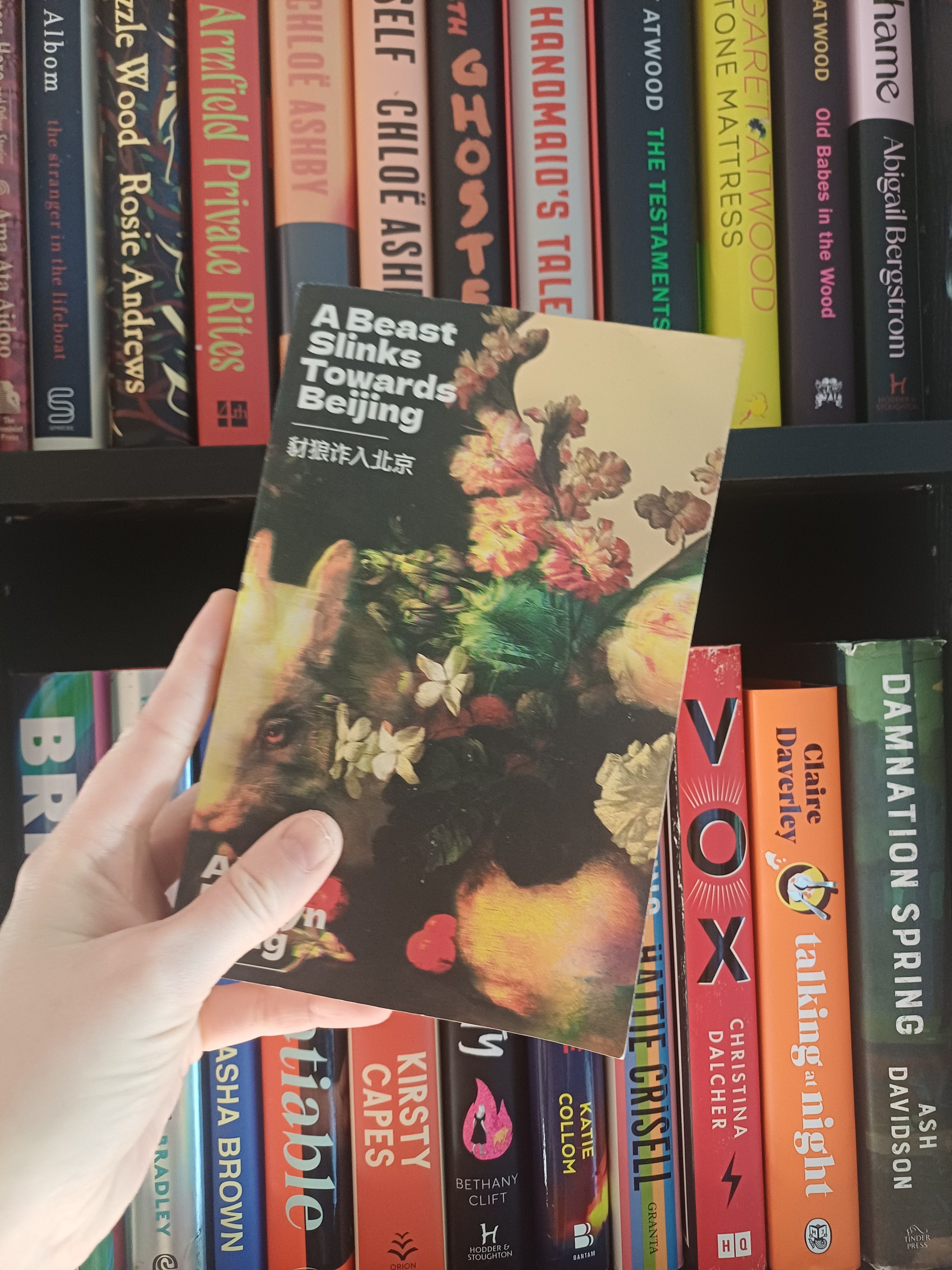
‘Qianze has not seen her father in eleven years, since he walked out of her life the night of her fourteenth birthday and disappeared without a trace. But then she gets a call—there is a man on the porch of her childhood home, and he’s asking for her. This man isn’t the Ba Qianze remembers: he is much older, more fragile, and worst of all, haunted by a half-forgotten prophecy.’
Longlisted for the Women’s Prize for Fiction, A Beast Slinks Towards Beijing is one of those novels that stun you to silence when you finish it. In fact, I’m pretty sure I gasped out a ‘wow,’ before flicking straight back to the start to study the feat of structure and storytelling Yang has pulled off.
Told over three generations, the story spans not just years but the expansiveness of a whole lineage, stretching far beyond its pages. I was especially moved by Ming’s sections of the narrative (Qianze’s grandmother), which date back to 1920s China and then journey through to Japan’s invasion and its eventual surrender.
In areas of History little studied on the Western curriculum, the reader learns about the atrocities inflicted upon China’s people, including the sexual slavery of Comfort Women imprisoned by the Japanese Imperial Armed forces during WWII. In Ba’s sections, we learn about the origins of The Beast and its foreboding prophecy, spanning the period of Cultural Revolution under communism. These sections were especially hard to stomach, with Weihong’s indoctrination into violence rendered in gory and affecting detail.
Read it and you’ll come away with a powerful insight into intergenerational trauma, in the violence handed down that can feel like prophecy in the way it shapes our lives for years and years to come. Yang’s prose is so accomplished it awed and humbled me whilst simultaneously challenging my Eurocentric education in the best, most enriching way.
It's all material for the next one xx
Thank you for your vulnerability, Katie. Sending love from across the pond!